
Beach environments create a unique transportation challenge. Soft sand, uneven ground, salt air, and heavy gear all combine to make simple movement surprisingly difficult. Whether you are heading out for a long fishing session, setting up a full family beach day, or transporting equipment across coastal terrain, the way you move your gear directly affects your overall experience. A Beach Hand Cart is not just a convenience accessory. It becomes a practical mobility solution designed to handle terrain that standard carts simply cannot manage.
Engineered for Sand, Gravel, and Uneven Terrain
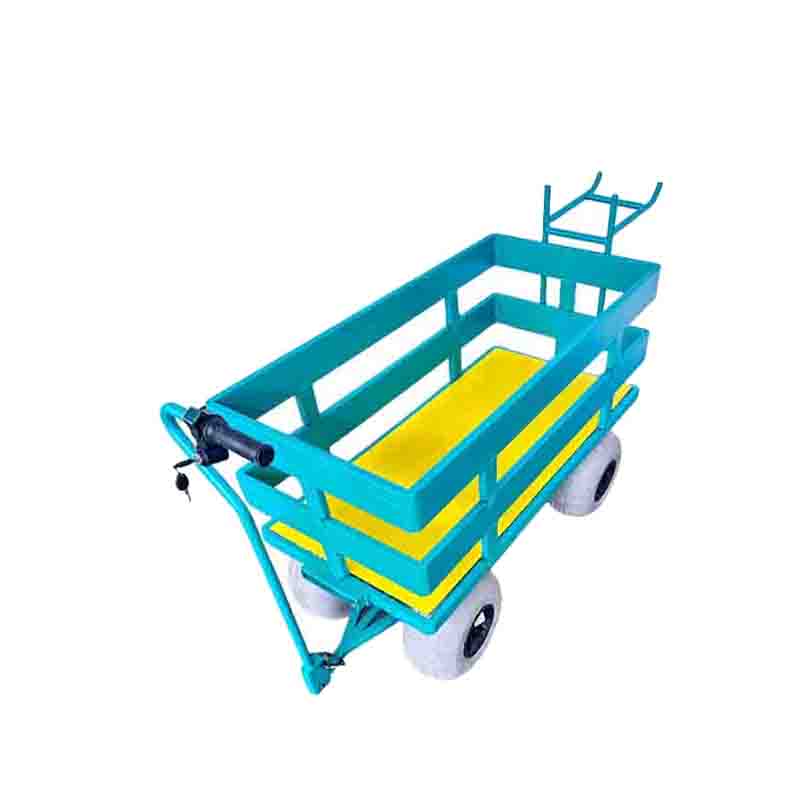
Soft sand is the biggest obstacle for traditional carts. Narrow plastic wheels tend to sink, tilt, and create drag, forcing users to pull with excessive effort. A well-designed Beach Hand Cart addresses this challenge through wide 13-inch PU inflatable wheels. The larger contact surface distributes weight more evenly, reducing sinking and maintaining forward momentum.
Inflatable PU wheels also absorb vibration when crossing gravel, grass, or compacted dirt. Instead of constant jolts and instability, movement remains controlled and balanced. For fishing along the shoreline or transporting equipment to a pier, this stability reduces fatigue and makes longer distances far more manageable. Terrain adaptability is not an added feature; it is the foundation of the cart’s performance.
Load Capacity and Structural Support
Outdoor transport often involves bulky and heavy items. Coolers filled with ice, fishing rods, surfboards, folding chairs, umbrellas, and storage boxes quickly add up in weight. A Beach Hand Cart built with a reinforced frame and a 400 lbs load capacity allows users to consolidate multiple trips into one efficient haul.
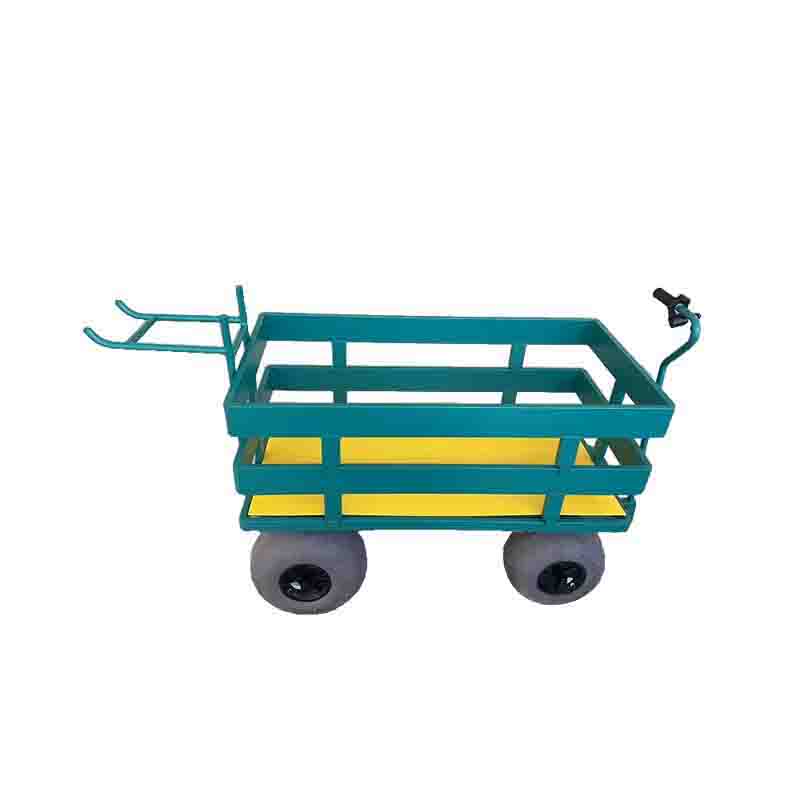
With a spacious frame measuring 45.9″ x 27″ x 7.9″, the platform provides sufficient surface area for long or irregularly shaped items. Structural balance is critical here. Proper weight distribution across the axle and wheelbase prevents tipping and lateral instability, especially when navigating sloped dunes or uneven beach entry paths. The frame must function as a stable load-bearing platform rather than just a carrier.
Sealed Design and Cargo Security
Transporting small accessories across sand presents another common issue: item loss. Bumpy terrain can cause loose items to fall through gaps or shift during movement. A sealed, leak-proof design ensures that smaller gear remains contained throughout the journey.
This type of enclosed structure protects both equipment and convenience. Hooks, bait boxes, tools, water bottles, and personal items stay securely in place, even when the Beach Hand Cart encounters uneven ground. In practical use, cargo security improves efficiency by eliminating the need to constantly stop and reorganize equipment.
User Experience and Operational Efficiency
Mobility in outdoor environments is directly linked to user comfort. Excessive drag, unstable wheels, or poorly balanced frames increase physical strain and reduce overall enjoyment. A properly engineered Beach Hand Cart improves operational efficiency by minimizing resistance and maintaining directional stability.
The combination of large pneumatic wheels and a balanced frame allows the cart to move smoothly even under heavy load. This reduces pulling force and improves maneuverability. For individuals transporting equipment over long distances, energy conservation becomes a measurable advantage.
In fishing scenarios, faster setup time means more time focused on the activity itself. In recreational settings, efficient transport shortens preparation time and simplifies breakdown at the end of the day. The cart supports the activity rather than becoming an obstacle.
Durability in Coastal Environments
Beach conditions introduce moisture, salt exposure, and abrasive sand particles. Structural components must withstand corrosion risk and mechanical wear over time. Durable materials and sealed structural design help extend service life, particularly in environments where repeated exposure is unavoidable.
Wheel integrity is especially important. Inflatable PU tires provide flexibility while maintaining structural resilience. When paired with a sturdy frame, the cart maintains performance consistency across repeated use cycles. Durability is not defined only by load rating but by sustained reliability under environmental stress.
Versatility Beyond the Beach
Although optimized for sand, a Beach Hand Cart is not limited to coastal use. The same wheel structure and load capacity make it suitable for parks, campgrounds, lakefronts, and outdoor events. Grass fields, gravel trails, and uneven outdoor paths present similar challenges that benefit from wide pneumatic wheels and stable load support.
For users who regularly transport heavy or oversized equipment outdoors, adaptability across multiple terrains increases long-term value. Instead of purchasing separate solutions for different environments, one cart can handle a broad range of applications.
Conclusion
Outdoor transportation in sandy or uneven environments requires more than a standard utility cart. It demands stability, terrain adaptability, cargo security, and structural durability. A properly designed Beach Hand Cart integrates these factors into a single system that reduces physical effort and improves efficiency.
From shoreline fishing trips to full-scale beach setups, dependable mobility transforms preparation from a struggle into a streamlined process. In challenging outdoor conditions, reliable transport is not simply about convenience. It is about enabling smoother, more controlled movement across terrain that would otherwise slow everything down.