
Beach fishing is often associated with freedom and relaxation, but transporting equipment across sand is a persistent challenge. Fishing rods, tackle boxes, coolers, bait buckets, and personal gear quickly become heavy and difficult to manage, especially over longer distances. Traditional carts and hand-carrying methods are poorly suited for soft terrain. A fishing beach cart addresses this issue by combining load capacity, structural stability, and terrain adaptability into a single transport solution. In this context, the cart is not a convenience accessory—it is a functional tool that directly affects efficiency and physical strain during fishing trips.
Structural Capacity for Heavy Fishing Equipment
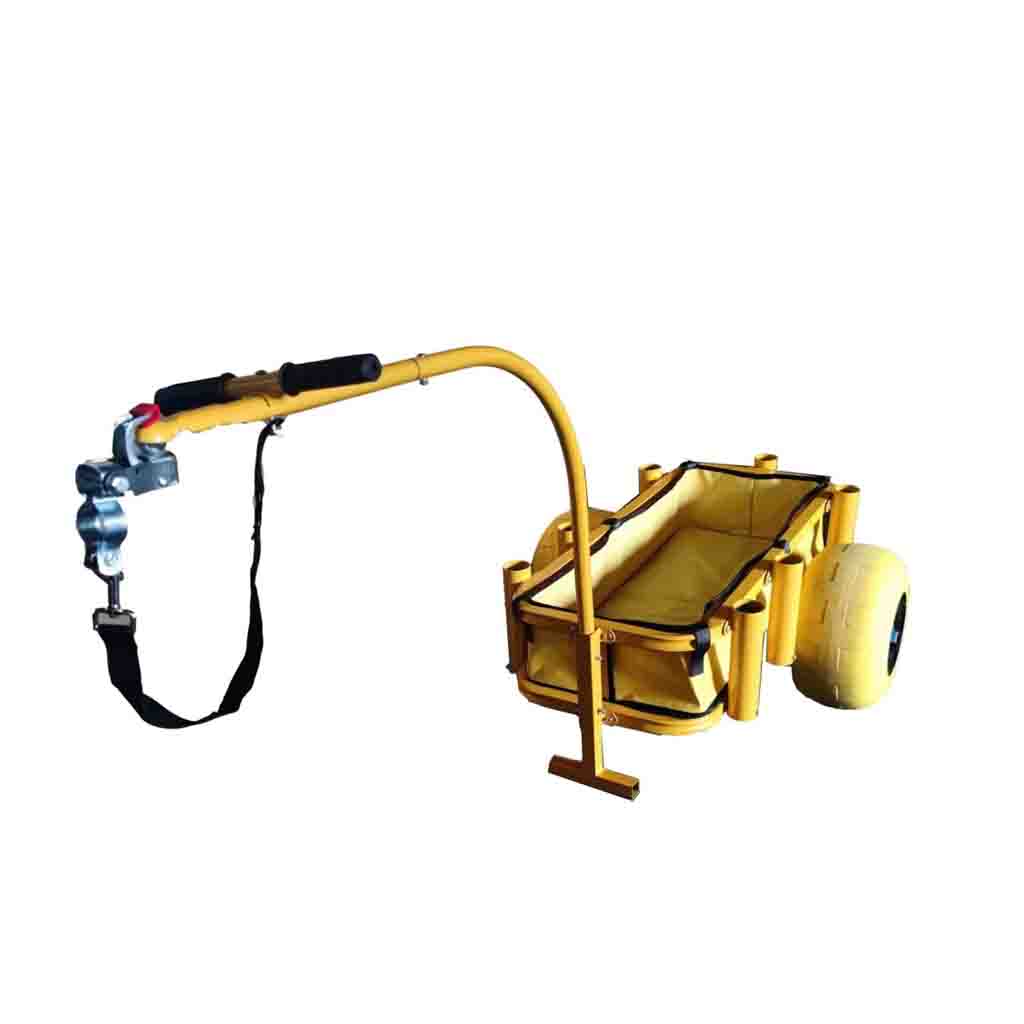
Fishing beach carts are designed to support a wide range of gear in a single load. A spacious, foldable cargo basket measuring 36″ x 16″ x 7″ provides sufficient room for rods, tackle boxes, coolers, and bait containers. With a capacity of 58 quarts and a load rating of up to 330 lbs, the cart accommodates the weight typically associated with full-day or multi-person fishing outings. Proper load distribution within the basket helps maintain balance and prevents shifting during movement, which is especially important when navigating uneven or soft ground.
Reinforced Frame Design and Load Stability
Without a stable frame, large load capacity alone is ineffective. Fishing beach carts rely on reinforced aluminum tubing, enlarged chassis structures, and strengthened base supports to maintain rigidity under load. These structural elements work together to prevent deformation, tipping, or instability when the cart is fully loaded. Aluminum construction provides a balance between strength and weight, ensuring durability while remaining manageable for manual transport. A foldable frame design also allows the cart to collapse for storage in vehicle trunks, garages, or boats without compromising structural integrity.
Wheel Design for Sand and Mixed Terrain
One of the most critical components of a fishing beach cart is the wheel system. Standard narrow wheels tend to sink into soft sand, increasing resistance and user fatigue. Large 13″ balloon wheels are engineered to distribute weight over a wider surface area, allowing the cart to roll smoothly across sand, gravel, and shoreline terrain. This design reduces drag and improves maneuverability, making it easier to transport heavy loads over longer distances. Quiet, stable movement also minimizes disruption and improves overall handling control.
Application Across Different Fishing Environments
Although optimized for beach use, fishing beach carts are not limited to sandy shorelines. They are equally effective on piers, lakesides, and riverbanks where equipment must be moved efficiently from vehicles to fishing locations. The open basket structure allows quick access to gear, while the stable frame protects equipment during transport. This versatility makes the cart suitable for both recreational anglers and frequent fishing use across varying environments.
Material Selection and Environmental Resistance
Material choice plays an important role in long-term performance. Aluminum frames offer corrosion resistance and structural reliability in outdoor environments where exposure to moisture and salt air is common. Wheel materials and fasteners must also withstand repeated exposure to sand, water, and load stress. Selecting materials that match actual environmental conditions helps extend service life and maintain consistent performance over time.
Setup, Handling, and Practical Use
Ease of use is a key consideration in fishing beach cart design. Foldable structures allow quick setup and breakdown, while stable geometry supports smooth pulling and steering. Proper alignment of wheels and frame components reduces rolling resistance and prevents uneven wear. Attention to these details improves user comfort and helps maintain performance throughout repeated trips.
Conclusion
A fishing beach cart is defined by more than its appearance or size. Its effectiveness depends on structural strength, wheel performance, and material durability working together as a system. When engineered correctly, the cart reduces physical strain, improves transport efficiency, and allows anglers to focus more on fishing and less on carrying gear. In this sense, successful beach fishing logistics are supported by thoughtful engineering behind the scenes.